
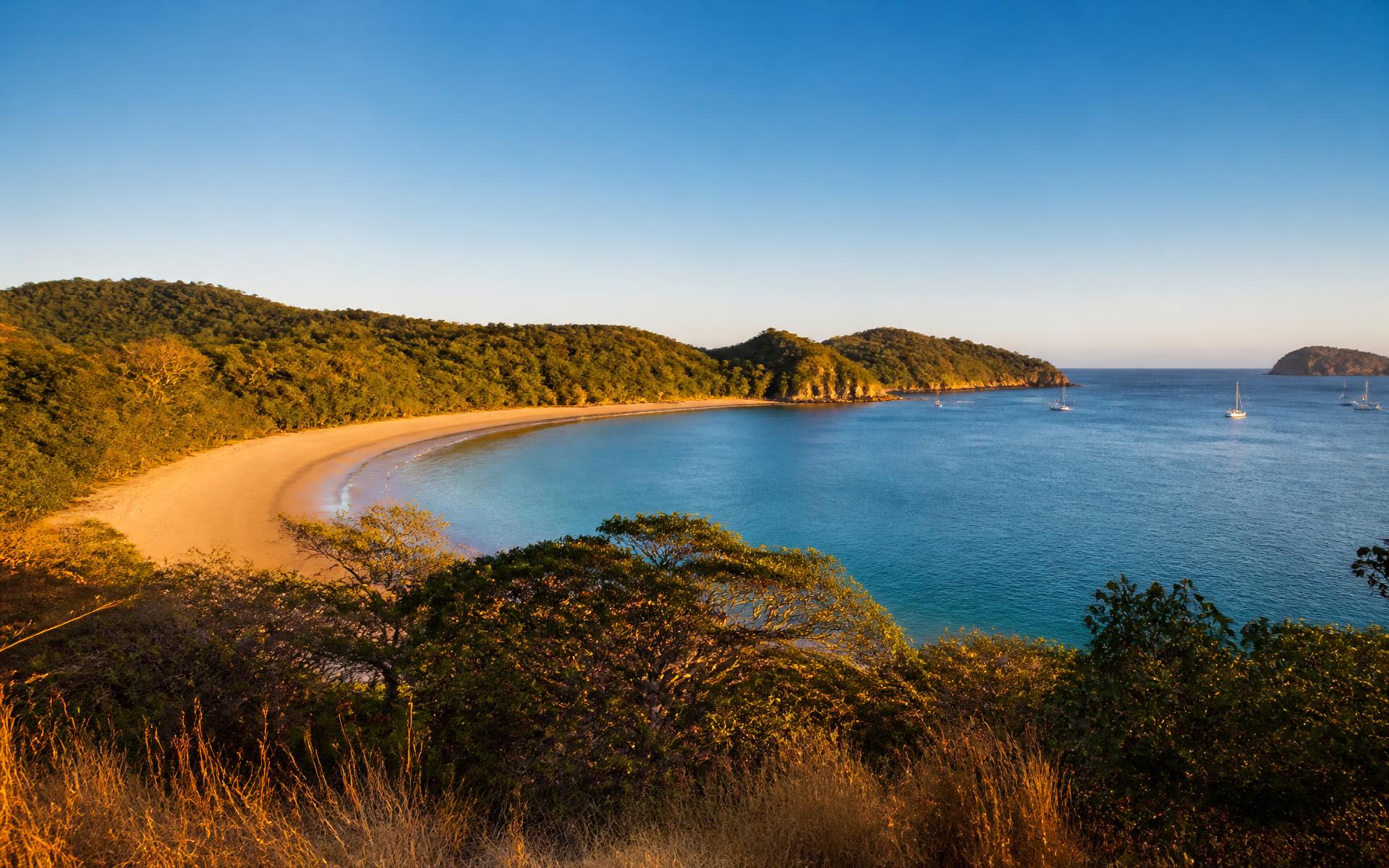
Costa Rica's dry Pacific northwest: a string of separate bays and beach towns under one regional name, from the resort enclave of Papagayo to surf-led Tamarindo, backed by dry tropical forest and volcanoes.
Timing
Best months to go
Estimated. A modelled estimate — directionally useful, not a measured figure.
- Jan
- Feb
- Mar
- Apr
- Nov
- Dec
Weather · A real dry season, unlike most of Costa Rica
Guanacaste sits in the Pacific North climate region, which the national meteorological institute (IMN) describes as having the country's most pronounced dry season — roughly December to April, with reliable sun and brown, leafless dry forest. The green season runs roughly May to November; rain usually arrives as afternoon storms rather than all-day cloud, and rainfall generally peaks in the later months of the wet season, when some properties reduce service or close.
Tropical and hot at sea level through the year, with the strongest heat late in the dry season. Pacific water here is warm by tropical standards in every season.
Seasonality
Month by month
Estimated. A modelled estimate — directionally useful, not a measured figure.
| Month | Suitability | Avg temp | Rain | Crowds |
|---|---|---|---|---|
| Jan | 80 | 27°C | 27 | 86 |
| Feb | 85 | 28°C | 14 | 99 |
| Mar | 86 | 30°C | 16 | 52 |
| Apr | 76 | 31°C | 30 | 52 |
| May | 59 | 31°C | 84 | 58 |
| Jun | 54 | 31°C | 78 | 59 |
| Jul | 55 | 30°C | 79 | 94 |
| Aug | 51 | 28°C | 75 | 95 |
| Sep | 54 | 27°C | 72 | 49 |
| Oct | 57 | 25°C | 77 | 55 |
| Nov | 91 | 25°C | 30 | 59 |
| Dec | 89 | 25°C | 19 | 92 |
Scores are 0–100. Higher suitability is better; higher rain and crowd values mean more of each.
Experience intelligence
What this destination is strong at
Awaiting review. Generated during catalogue build and not yet reviewed by a human.
Beach
85Nature
85Adventure
80Food
50Culture
68Nightlife
45Wellness
88Luxury
70Romance
81Family
82Who it suits
Traveller suitability
Awaiting review. Generated during catalogue build and not yet reviewed by a human.
Solo
64Couples
72Friends
58Families
80Honeymoon
80Luxury traveller
75Budget traveller
49Older traveller
64Creator intelligence
Content potential
Awaiting review. Generated during catalogue build and not yet reviewed by a human.
Photography
72Cinematic
71Drone
72Viral potential
60Honest intelligence
Know before you go
Limited evidence. Thin supporting evidence today. Treat as indicative and confirm before you commit.
- Rainy seasonseverity 69/100Mostly May, Jun, Jul, Aug, Sep, OctA pronounced wet season with frequent heavy rain
- Tropical cyclone riskseverity 58/100Mostly Jul, Aug, SepTropical cyclone risk in the wettest months
Where to base
Top neighborhoods to stay in
Papagayo Peninsula
Resort-led stays, families, low-effort tripsA planned peninsula of sheltered bays north of Liberia, and the region's most self-contained luxury base. Calm water, one of the shortest airport transfers in the region, and the highest concentration of full-service resorts — but you are inside a private enclave, and going out to eat means driving. Choose it if the point is the property.
Playas del Coco and Ocotal
Diving, boat access, walkable town lifeWorking beach towns just south of Papagayo. Less polished than the peninsula and less manicured than the southern bays, but the practical base for diving, fishing and boat departures, and the one nearby with real walk-out dining.
Tamarindo and Langosta
Surf, nightlife, a busy centreOne of Guanacaste's most visited and most developed beach towns, roughly an hour and a half south of the airport by road. Surf schools, dense restaurants and the region's main concentration of bars. Langosta, immediately south, is quieter and largely residential.
Las Catalinas, Flamingo, Conchal and Potrero
Car-light stays, marina access, pale-sand baysThe northern Nicoya bays. Las Catalinas is a privately developed town its developer designed to be walked rather than driven, with trail access from the streets; Flamingo adds a modern marina, Conchal is the pale crushed-shell bay behind a large resort, and Potrero is the ordinary town between them. Small, distinct, and within minutes of each other.
Further down the peninsula
Yoga, surf, slow staysNosara and Santa Teresa sit far down the Nicoya Peninsula and function as their own destinations rather than as parts of a Guanacaste trip. Long unpaved approaches and multi-hour transfers from Liberia; plan them separately, not as day trips from the north.
Do
Top experiences
Rincón de la Vieja
An active volcano national park with fumaroles, mud pots, waterfalls and forest trails inland from Liberia. Sectors including Las Pailas are closed and reopened by resolution when volcanic activity rises; check the Área de Conservación Guanacaste notices before committing to a day.
Sailing the northern bays
Half-day catamaran and boat trips out of Papagayo, Coco and Flamingo — the standard way to see this coastline.
Diving the Bat and Catalina Islands
The Bat Islands sit inside the marine sector of Santa Rosa National Park, where conservation research documents recovering bull shark populations; the Catalinas, off Flamingo, are the closer rock-and-ray sites. Conditions vary sharply by season and both are advanced-leaning.
Dry-forest wildlife
Santa Rosa and Palo Verde protect tropical dry forest — a far more reduced forest type across Central America than the rainforest Costa Rica is known for. Wildlife is easiest to see late in the dry season, when the trees are bare.
Turtle nesting
Ostional is a national wildlife refuge known for olive ridley arribadas, and Playa Grande sits inside Las Baulas marine national park, protecting leatherback nesting. Both are guide-led and regulated by SINAC; seasons shift year to year, so confirm before booking around them.
Río Celeste and Tenorio
The pale-blue river and waterfall in Tenorio Volcano National Park, inland. Allow a full day — the drive is commonly reckoned at two to three hours each way from the coast.
You may also consider
Scores and seasonality are modelled from historical data — guidance, not a forecast. Verify conditions and requirements before you book. Travel & AI Disclaimer